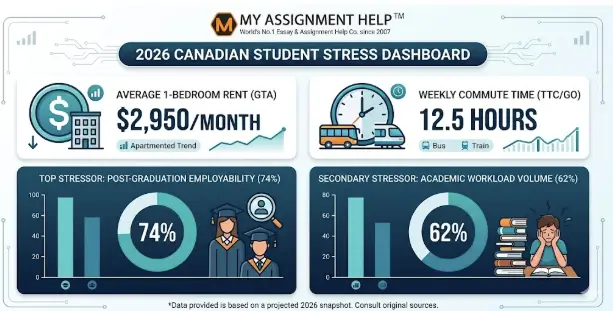
The landscape of Canadian higher education in 2026 is more vibrant, diverse, and technologically advanced than ever before. However, beneath the surface of innovative research and bustling campuses in the Greater Toronto Area (GTA), a significant challenge persists: the mental health and academic pressure faced by post-graduate students. As the cost of living in urban hubs continues to rise and the job market becomes increasingly competitive, the “struggling student” trope has evolved into a complex mental health crisis that requires strategic navigation.
The Anatomy of Post-Grad Stress in 2026
Recent data from the Canadian Association of University Teachers indicates that nearly 68% of post-graduate students in Ontario report “overwhelming anxiety” at least once during their semester. The pressure isn’t just about grades; it’s about the integration of professional expectations, financial stability, and the pursuit of academic excellence. In 2026, the rise of AI-integrated curricula has added a new layer of complexity, demanding that students not only master their subject matter but also the digital tools used to present it.
For many international and domestic students residing in high-cost areas like Toronto or Mississauga, the math of survival is daunting. When the hours spent in the library conflict with the hours needed at a part-time job to cover rising rent, something has to give. In these high-pressure scenarios, students often seek ethical ways to distribute their workload. Whether it is looking for specialized tutoring or choosing to pay someone to do assignment tasks that are outside their primary research focus, the goal is often survival and the maintenance of a healthy GPA in a hyper-competitive environment.
Visual Communication: The New Academic Currency
In 2026, the traditional 50-page thesis is often accompanied by a requirement for high-level visual storytelling. Canadian universities are placing a heavier emphasis on “Knowledge Mobilization”—the ability to explain complex data to non-academic stakeholders. This usually culminates in high-stakes presentations that require advanced design skills that many students simply haven’t been trained for.
Facing this challenge, students frequently seek expert design assistance, often reaching out to specialists to do my powerpoint presentation for me. By ensuring that their visual data is professionally formatted and engaging, students can present their findings with the confidence needed to succeed in a visual-first academic economy. This strategic delegation allows the student to focus on the oral defense and core research rather than wrestling with software alignment.
Key Takeaways for 2026 Success
- Audit Your Time: Use automated trackers to see where your hours are actually going. Time spent on the GO Train is prime time for administrative review.
- Leverage Local Support: Campus mental health offices in the GTA are now integrated with provincial healthcare for faster access. Don’t wait for a crisis to seek a “Wellness Credit.”
- Outsource Strategically: Focus your energy on your “core” thesis work and seek help for administrative or technical formatting tasks.
- Budget for the “GTA Tax”: Factor in a 5% annual increase in local living expenses when planning your multi-year post-grad journey.
References & Data Sources
- Statistics Canada (2025): “The Economic Impact of Post-Secondary Education in Urban Hubs.”
- Ontario Ministry of Colleges and Universities: “Student Well-being and Mental Health Framework 2026.”
- GTA Housing Report (2026): “Rental Market Analysis for the Student Corridor.”
See also: Marketing Analytics and ROI
Frequently Asked Questions (FAQ)
Q: How can I manage high rent in Toronto while studying?
Many students are moving toward “Co-living” programs in the York and Peel regions, which offer lower rates than traditional downtown condos and include utilities in the rent.
Q: Is it common for Canadian students to use academic support services?
Yes. With the increasing complexity of interdisciplinary studies, many students use specialized services for formatting, data analysis, and professional presentation design to meet high Canadian standards.
Q: What is the best way to handle ‘presentation anxiety’?
Preparation is key, but so is the quality of your visual aids. Having a professionally structured slide deck allows you to rely on your visuals, reducing the pressure to memorize every word.
Author Bio:
Kara Betty is a Senior Content Strategist at MyAssignmentHelp, specializing in the Canadian higher education sector. With over a decade of experience in SEO and academic trends, they provide actionable insights for students navigating the rigours of university life in the GTA and across Canada. Connect with her on Linkedin
